

A rail arrival followed by a Chicago business appointment has two different schedules: the train’s operating timetable and the host’s calendar. The private-car plan connects them, but it should not hide the time needed to leave Union Station, deal with luggage, and enter the destination building.
For an executive visitor, the most useful reservation brief starts with the first commitment that cannot move. A West Loop meeting, a River North hotel stop, and an afternoon visit outside downtown create different decisions about bags and departure times. Use this guide to brief an assistant, coordinate with a host, and arrange a return to the train without turning the day’s itinerary into a series of improvised instructions.
Set the appointment anchor first
Ask the host what time you need to be inside the meeting room, rather than merely outside the office. Include visitor registration, the correct building entrance, and any preparation before the discussion. Those details establish the destination deadline for your ground transportation request.
Next, identify which parts of the morning can move. A coffee stop may be optional; a presentation may not be. If the rail itinerary leaves little space between arrival and the appointment, discuss a later start with the host before confirming the trip. A car booking does not remove the uncertainty in the incoming train’s arrival.
Make arrival communication one person’s responsibility
Put one traveler and one office contact on the itinerary. The traveler should carry the phone used for station coordination, while the office contact can handle appointment changes without relaying conflicting pickup instructions.
Give the transportation company the train number and Chicago arrival date. Check train status through the Amtrak app, which the station’s rail travel page describes, and agree on how changes should be communicated. Ask about the reservation’s waiting and rescheduling terms before the travel day.
Keep the passenger’s readiness message separate from the train update. The company needs to know when the traveler has collected belongings and can reach the agreed meeting location, not simply when the train enters Chicago.
Choose between the office and the hotel
Going directly to a West Loop office can simplify the first leg if you can take your belongings inside. Confirm that with the host. If luggage cannot accompany you into the meeting, arrange a hotel handoff first and allow time for it.
A River North hotel stop needs a real purpose: checking in, leaving a suitcase under the hotel’s policy, or meeting a colleague. Tell the transportation company whether the car trip ends there or whether another leg is requested. Have the company confirm the service arrangement rather than assuming the vehicle will remain available while you are indoors.
Give luggage a destination of its own
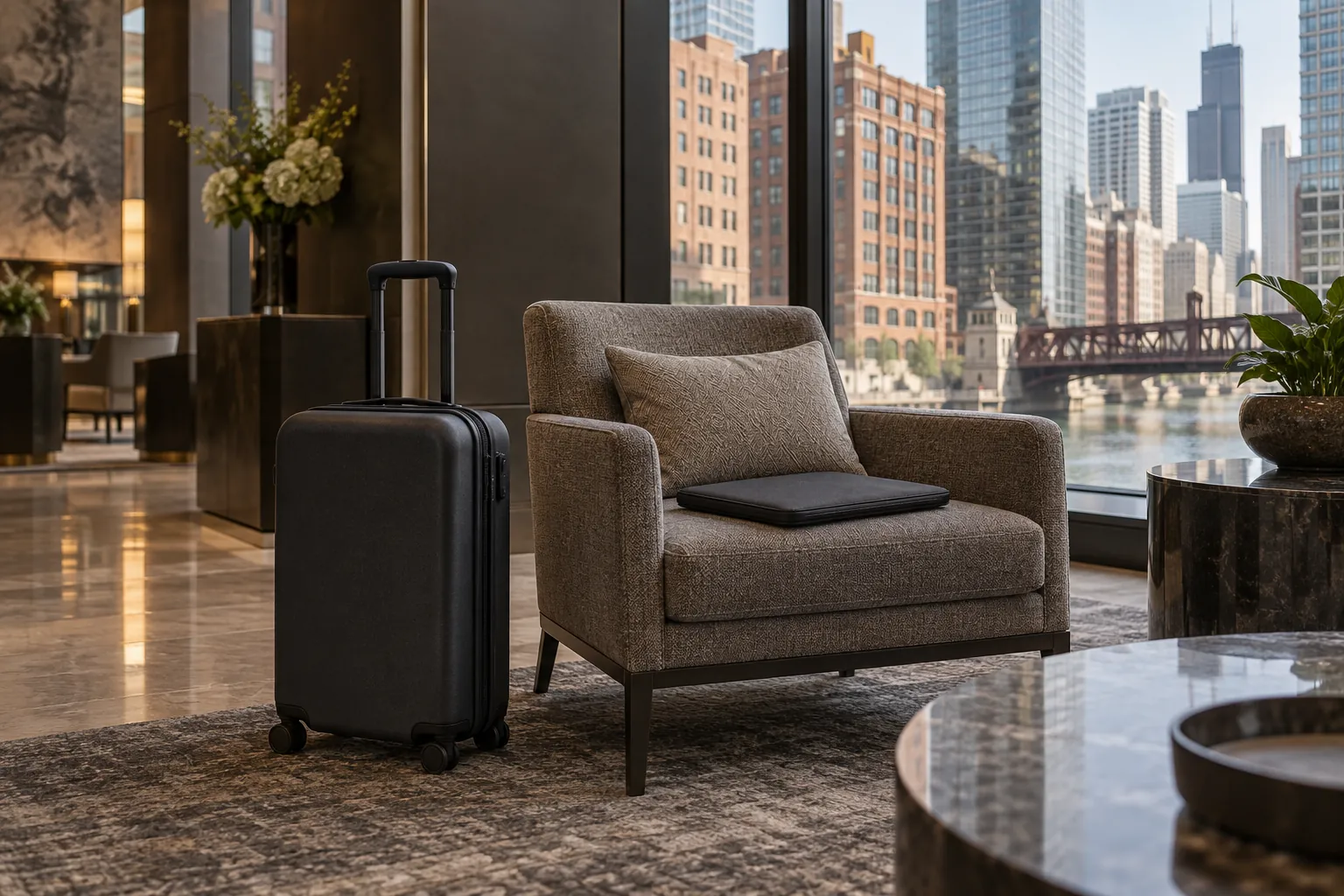
Decide where each bag will be during the appointment. Your laptop may stay with you while a larger case goes to the hotel. Keep essential work materials in the bag that follows you, especially if a hotel stop is dropped because the train arrives later than expected.
Union Station’s official map and concourse information help you orient yourself before arrival. Reconfirm the actual street meeting instructions with the transportation company; a map pin or office mailing address does not establish a private-car loading location.
When requesting the vehicle, describe the luggage alongside the passenger count. Add presentation cases or equipment explicitly, and obtain confirmation that the proposed vehicle suits the complete load.
Treat an offsite appointment as another leg
A downtown visit followed by a Glenview business stop changes the return calculation. Record the second address, the person you are meeting, and the expected release time before choosing the train home. Avoid leaving the suburban destination as a vague note on the original booking.
The Glenview car-service information can support your route inquiry. Request pricing for the actual office and Union Station itinerary; a listed airport route should not be treated as the price of this trip.
If the afternoon agenda is uncertain, ask the company to explain which service structure accommodates it and what limits apply. Confirm all stops and any vehicle waiting separately.
Establish a firm time to leave the last meeting
Work backward from the train departure using station arrival guidance, current road conditions, and the time needed to gather belongings. Tell the host your departure deadline at the start of the meeting so the final discussion does not consume the travel margin.
The station’s Amtrak page lists Great Hall train calls and boarding 45 minutes ahead of departure. Confirm your train’s current instructions, then set a station arrival deadline that also covers baggage and any assistance. The drive from Glenview or a downtown office must finish before that deadline; it does not fit inside the boarding allowance.
Leave time to retrieve hotel luggage if it did not accompany you. That stop belongs before station arrival, not inside the boarding allowance.
Write down who can change the itinerary
An assistant may know that a meeting moved before the traveler checks a message. Establish who can request a pickup change and who must acknowledge it. Keep the latest address and time in one shared itinerary so the host, passenger, and transportation company use the same version.
If the traveler needs assistance moving through the station, consult the station’s accessibility information and confirm current arrangements. Station assistance and vehicle accessibility are separate questions; specify the actual requirement when arranging each service.
For a delay, notify the next appointment and the transportation company together. Obtain a confirmed revision rather than assuming an unanswered message changed the booking.
Finish with a concise executive travel brief
Use LimoChicago’s reservation form to submit the rail arrival, first appointment address, hotel handoff if needed, and final train departure. Include passengers, luggage, equipment, and the contact authorized to coordinate changes.
Ask the company to confirm the complete itinerary, meeting instructions, vehicle arrangement, and applicable terms. A clear brief gives every participant the same sequence of commitments and makes changes easier to evaluate before they affect the next leg.