
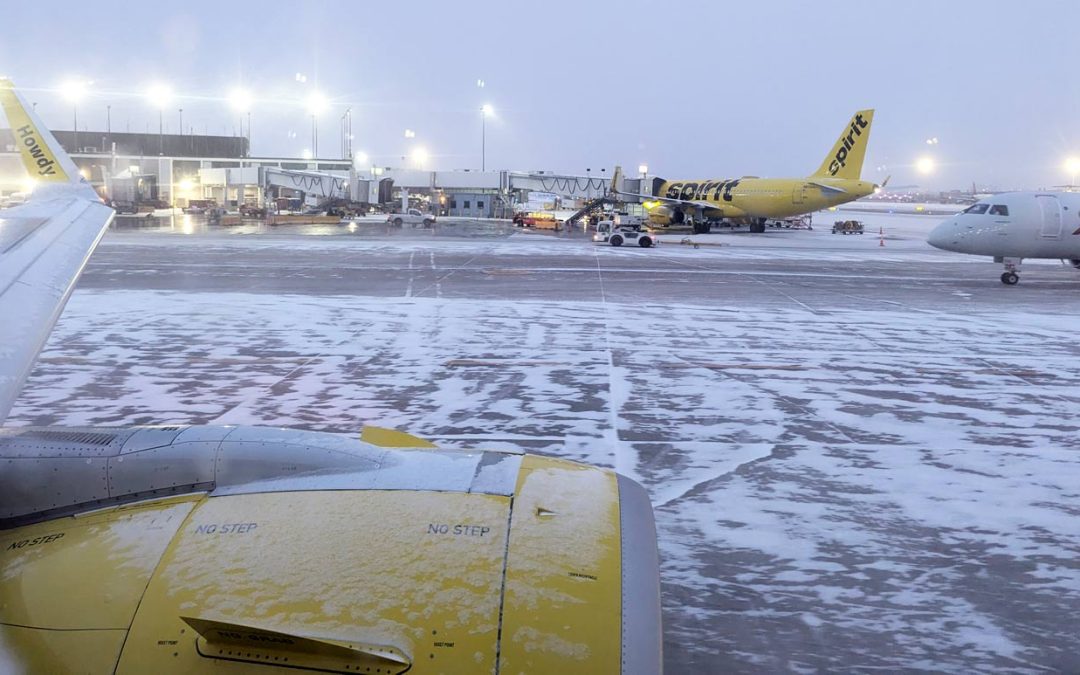
The airline industry continues to reshape itself, and one of the latest developments involves the assets once owned by Spirit Airlines. Spirit Aviation Holdings has asked the U.S. Bankruptcy Court for the Southern District of New York to approve the transfer of two former Spirit gates at Hartsfield-Jackson Atlanta International Airport to Delta Air Lines. According to court filings, Delta submitted the winning bid, offering approximately $12 million to assume the lease for gates C4 and C6 through June 30, 2031.
On the surface, the story appears to be about two airport gates changing hands. In reality, it represents another milestone in the final chapter of one of America’s best-known ultra-low-cost airlines. Spirit has ceased operations and is now liquidating its remaining assets, allowing larger carriers to acquire valuable airport infrastructure that once supported thousands of daily passengers.
For travelers, the news raises an important question: How will these changes affect future air travel?
Spirit’s Final Chapter
Spirit Airlines spent years changing the airline industry by proving that many travelers would gladly trade luxury for low fares. The airline became famous for its bright yellow aircraft, aggressive pricing, and optional fee-based services that allowed passengers to pay only for what they wanted.
That business model helped Spirit grow rapidly. At its peak, the airline served dozens of destinations throughout the United States, the Caribbean, and Latin America.
Unfortunately, the airline faced mounting challenges in recent years.
Rising fuel prices, inflation, increased labor costs, fierce competition, aircraft availability problems, changing travel demand, and substantial debt placed increasing pressure on the company’s finances. Like many airlines, Spirit also had to deal with supply chain disruptions and aircraft engine issues that reduced fleet availability.
The company entered bankruptcy protection for a second time during 2025 while attempting to restructure its operations. During that process, Spirit exited numerous airports, rejected leases for more than eighty aircraft, reduced service on many routes, and attempted to preserve cash by selling non-essential assets.
Those efforts ultimately were not enough.
Spirit officially ceased operations on May 2 and shifted from restructuring to liquidation. Instead of rebuilding the airline, management began selling valuable assets, including airport gate leases.
Delta’s Atlanta Expansion
The latest proposal involves two gates at Hartsfield-Jackson Atlanta International Airport, the world’s busiest airport and Delta Air Lines’ primary hub.
To many travelers, a gate may appear to be little more than a boarding area with a jet bridge. Within the airline industry, however, gates represent one of the most valuable operational assets available.
Every additional gate gives an airline more flexibility to:
- Schedule additional departures
- Reduce aircraft idle time
- Improve passenger connections
- Increase operational efficiency
- Expand future routes
Since major airports have limited space for expansion, airlines are willing to invest millions of dollars to secure long-term gate leases.
In Spirit’s case, Delta offered approximately $12 million for the rights to gates C4 and C6, subject to bankruptcy court approval.
Earlier This Year: Chicago O’Hare Gates Headed to United
The Atlanta transaction is not the first major airport asset sale involving Spirit.
Earlier this year, Spirit sought court approval to transfer two of its Chicago O’Hare International Airport gates—G12 and G14—to United Airlines for approximately $30.2 million.
Prior to that proposal, Spirit had already reassigned two additional O’Hare gates to American Airlines.
Those transactions demonstrated just how valuable airport access has become.
Chicago O’Hare remains one of the busiest airports in North America and serves as a major hub for both United and American. Opportunities to obtain additional gate space are rare, making existing leases extremely attractive whenever they become available.
Why Airport Gates Can Cost Tens of Millions of Dollars
Many people are surprised to learn that airport gates can be worth more than luxury office buildings.
The value extends far beyond the physical gate itself.
A gate allows airlines to:
- Board multiple aircraft each day.
- Increase flight frequency.
- Improve connection schedules.
- Grow market share.
- Reduce delays caused by aircraft waiting for available parking positions.
Building new gates is expensive, time-consuming, and often impossible due to airport space limitations.
As a result, existing gate leases frequently become valuable strategic assets that major airlines actively pursue whenever opportunities arise.
What Spirit’s Liquidation Means for Travelers
Although Spirit’s liquidation primarily affects creditors and competing airlines, passengers will likely notice several long-term changes.
Some routes previously served by Spirit may disappear completely.
Others will eventually return under different airlines, often at different prices.
Travelers may also experience:
- Reduced ultra-low-cost competition.
- Higher average ticket prices on some routes.
- Fewer nonstop flights.
- Less scheduling flexibility.
- Increased demand on remaining carriers.
Fortunately, large hub airports such as Atlanta and Chicago typically recover more quickly than smaller regional airports because several airlines compete for available capacity.
Smart Travel Planning During Industry Changes
Airline bankruptcies remind travelers that flexibility remains one of the most valuable parts of any travel plan.
Whether flying for business or leisure, it helps to:
- Book flights early.
- Monitor airline notifications.
- Consider refundable fares when practical.
- Purchase travel insurance for expensive trips.
- Have an alternative transportation plan if flights change unexpectedly.
While most flights operate exactly as scheduled, disruptions can occur for reasons ranging from weather to maintenance issues, labor shortages, and financial restructuring.
Having a backup plan often saves both time and frustration.
Minnesota Travelers Have Another Option
Commercial aviation is not always the best solution for every trip.
For many travelers heading between Minnesota and the Chicago metropolitan area, long-distance chauffeured transportation can provide a practical alternative—especially when airline schedules become inconvenient due to route changes, cancellations, or limited availability.
Instead of dealing with airport parking, security checkpoints, baggage claim, rental cars, and connecting transportation after landing, passengers can travel directly from their home, office, or hotel to their destination in the Chicago area.
Business travelers often appreciate the ability to continue working during the journey. A quiet luxury vehicle provides an excellent environment for emails, conference calls, presentations, or simply preparing for an important meeting.
Families also benefit from traveling together in one comfortable vehicle rather than purchasing multiple airline tickets, paying baggage fees, arranging airport parking, and coordinating transportation after arrival.
If changing airline schedules affect your travel plans, professional chauffeured transportation may completely replace the need to fly.
Travelers interested in direct transportation between Minnesota and Chicago can review current Minnesota limousine specials and long-distance transportation rates here:
Door-to-door service is available for:
- Chicago O’Hare International Airport (ORD)
- Chicago Midway International Airport (MDW)
- Downtown Chicago
- Corporate offices
- Hotels
- Universities
- Medical facilities
- Private aviation terminals
- Sporting and entertainment events
For many travelers, eliminating multiple transfers and airport delays creates a more comfortable, predictable, and enjoyable travel experience.
Looking Ahead
Whether Delta ultimately receives court approval for Spirit’s Atlanta gates or not, the larger trend is already clear.
Spirit’s remaining airport assets are gradually being absorbed by major carriers such as Delta, United, and American. As these airlines continue strengthening their hub operations, travelers will likely see continued changes in route availability, scheduling, and airport operations.
The airline industry has always evolved, and it will continue to do so.
For travelers, the best strategy remains simple: stay informed, plan ahead, and remain flexible. Airline schedules may change, but careful planning—and knowing your transportation alternatives—can help ensure that your journey continues smoothly from departure to destination.