
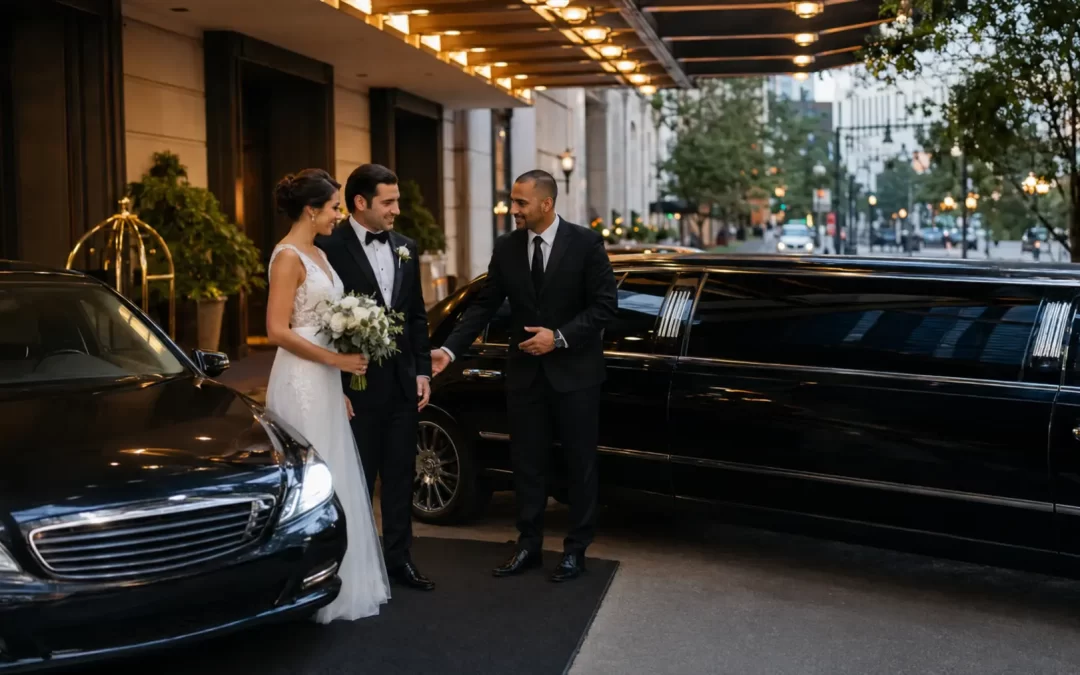
A downtown Chicago wedding limo timeline must account for more than the distance between the hotel, ceremony, and reception. Hotel elevators, loading zones, weekend traffic, photo permits, and formal clothing all add minutes. A realistic schedule gives the couple time to enjoy Chicago without watching the clock.
This version focuses on city weddings with downtown hotels, churches, lakefront or architectural photos, and a reception in another neighborhood.
Begin with the ceremony doors, not the pickup clock
Choose the time the wedding party should enter the ceremony building. Work backward from there. Add unloading, dress adjustment, walking, and a private moment before guests arrive. The limousine should reach the area before that target, not at the ceremony start.
Next, estimate how long the group needs to leave the hotel. A large party may use several elevators. Flowers may arrive in a separate room. The photographer may want lobby pictures before departure. Put these steps on the schedule instead of treating them as free time.
Share both the hotel name and exact entrance. Michigan Avenue, Wabash, and side-street doors can lead to very different loading conditions.
Match each downtown trip to the right vehicle
The couple may want a sedan or stretch limousine. The wedding party may fit better in a Sprinter. Parents and grandparents often need a separate SUV with an easier schedule. Guest transportation may require repeated van or bus movements.
Count people on every leg. Some attendants travel from the hotel to the ceremony but leave with partners after the reception. Others join only for photographs. The vehicle plan should follow the real passenger list.
Compare the Chicago wedding limousine fleet and discuss dresses, bouquets, mobility needs, and bags. Seat count alone cannot show usable comfort.
Plan the hotel departure with a protected buffer
Ask everyone to meet in the lobby early and fully ready. The chauffeur should not have to call several rooms while a downtown loading space sits occupied. Assign one attendant to count passengers and personal items.
Allow for a route change. Construction and special events can affect Lower Wacker Drive, Michigan Avenue, Lake Shore Drive, and streets around Grant Park. The best route during rehearsal may not be the best route on Saturday afternoon.
A protected buffer is not wasted time. It becomes time for photographs, water, or a calm arrival when traffic behaves.
Keep the couple’s essentials in one labeled bag. Moving loose phones, invitations, shoes, and personal items between vehicles often creates avoidable delays.
Keep the ceremony exit organized
Guests often surround the couple after the ceremony. Meanwhile, the wedding party needs to find the correct vehicle, and the photographer may request an exterior picture. Set a firm departure time and give one person authority to gather everyone.
The chauffeur needs the next address and route in advance. Avoid changing the photo plan through several passengers at the curb. One transportation contact should communicate updates.
Use fewer Chicago photo stops, with more time at each
Couples may consider the lakefront, a bridge, a park, or an architectural backdrop. Trying to visit all of them usually creates more driving than photography. Choose one primary stop and one weather alternative.
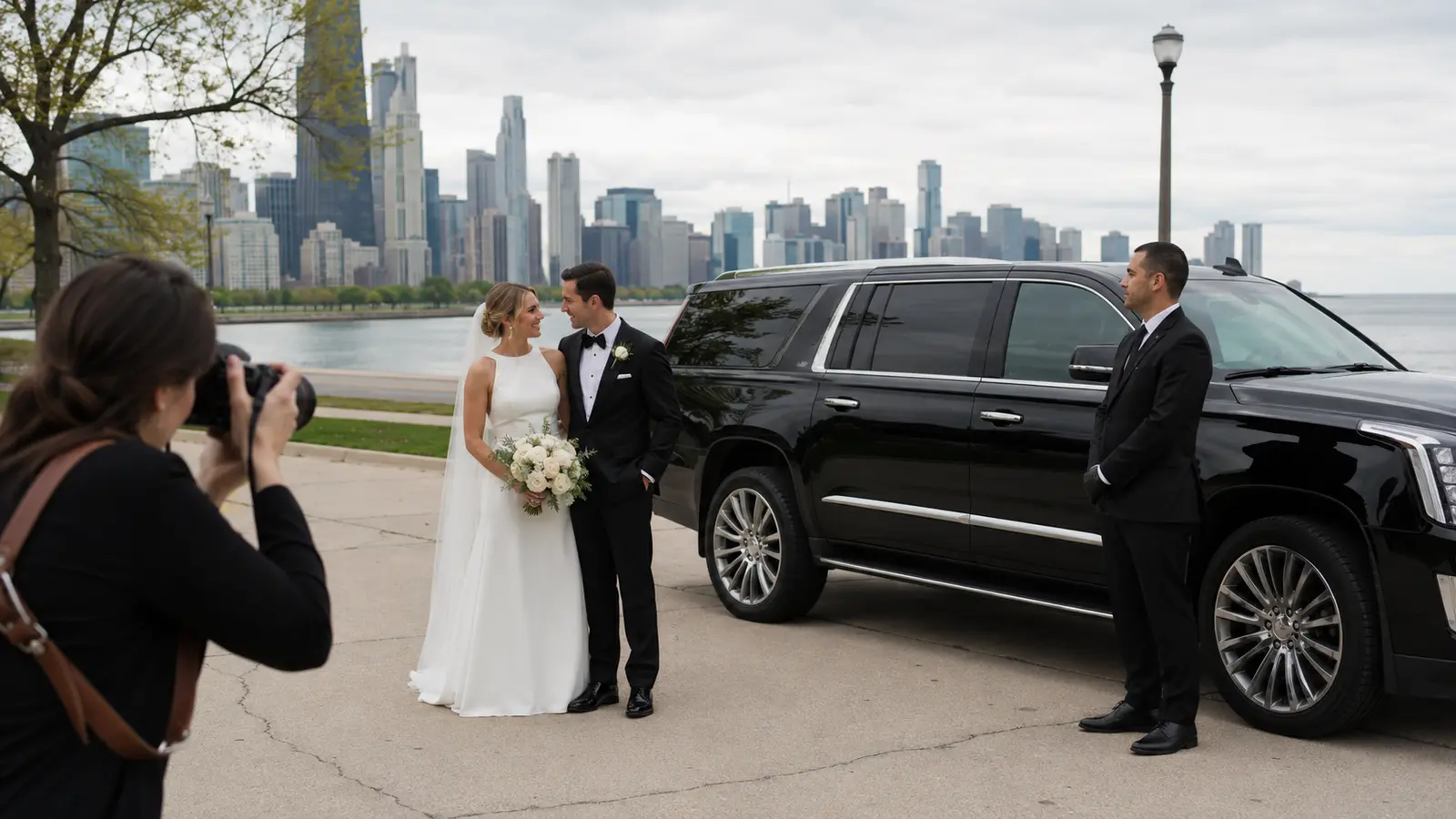
Include unloading and walking time. A black SUV may reach a practical curb more easily than a long stretch limousine at some locations. The photographer should know when the group must leave for the reception.
Schedule the reception entrance separately
Tell the venue when transportation expects to arrive. Some receptions use a service drive or a dedicated wedding-party entrance. Others need the vehicle to unload before valet traffic becomes heavy.
If the couple plans a formal introduction, aim to arrive early enough for the planner to organize attendants. A late limousine should not force the DJ, catering staff, and guests to wait.
The existing Chicago wedding limousine service guide can help with early vehicle decisions. The timeline turns those choices into a workable day.
Separate guest shuttles from the couple’s car
Guest transportation follows a different clock. Hotel-to-ceremony service may need two departures. Reception returns often work best at two or three fixed times. Publish those times on the wedding website and place a small sign near the venue exit.
Do not make the couple’s vehicle responsible for last-minute guest needs. Separate reservations keep the newlyweds’ departure private and preserve capacity for passengers who need a scheduled ride.
Confirm the complete city wedding timeline
One week before the wedding, send a single final document. Include addresses, entrances, passenger names, vehicle assignments, phone numbers, and desired arrival times. Add the indoor photo alternative and late-night departure schedule.
Request a Chicago wedding transportation quote with the complete route. A good timeline gives every driver, planner, and passenger the same answer before the first hotel pickup.