
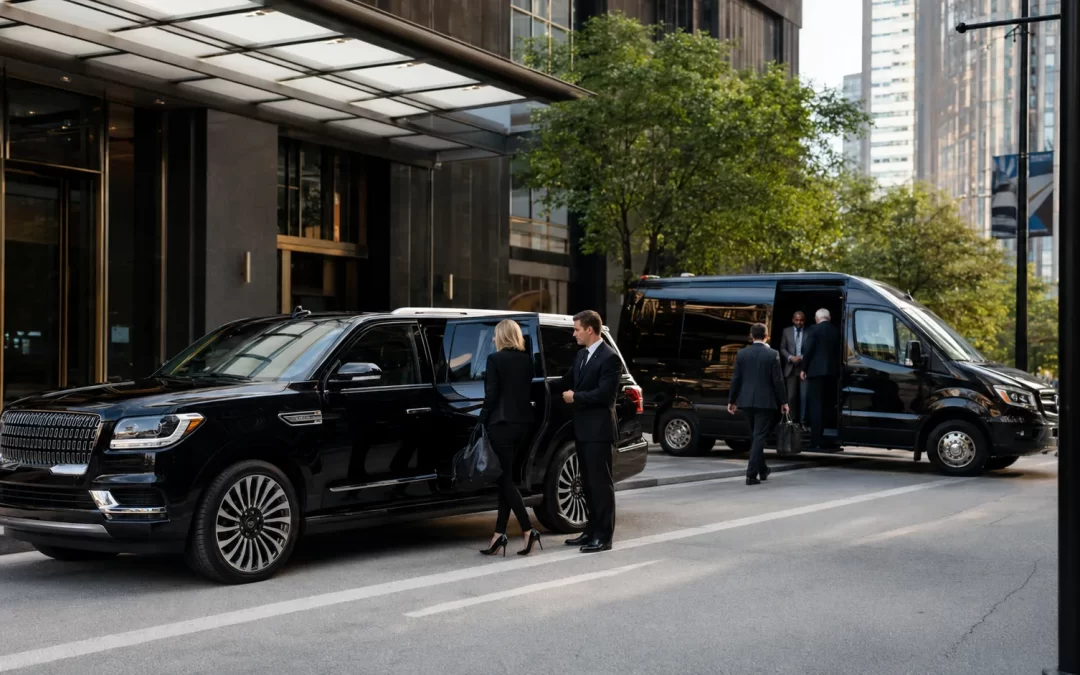
Chicago corporate transportation should support the business agenda, not become another item the team must manage. A well-planned service connects O’Hare or Midway, downtown hotels, McCormick Place, private offices, client dinners, and evening events with clear pickup instructions.
For a city-focused trip, the most important choices are timing, entrance details, vehicle capacity, and who has authority to change the plan.
Start with required arrival times
Build the itinerary around when the group must enter each meeting—not when it hopes to leave the hotel. Work backward to add unloading, walking, security, registration, elevator time, and a Chicago traffic buffer.
A 9:00 a.m. meeting does not mean a 9:00 a.m. curb arrival. A group entering a high-rise or convention hall may need fifteen or twenty minutes after leaving the vehicle.
Give the chauffeur exact downtown entrances
Many hotels, office towers, and venues have more than one usable door. Name the street, lobby, motor court, or loading zone. If a building uses Lower Wacker Drive, an upper street entrance, or a separate conference entrance, put that detail in writing.
Ask travelers to assemble in the lobby before pickup. Waiting for room calls while a vehicle occupies a busy downtown curb consumes the schedule buffer.
Match the vehicle to the assignment
Executive sedans work well for individual leaders. SUVs support small groups and airport luggage. Sprinters and passenger vans keep departments or client groups together. Larger vehicles may be appropriate for convention delegations.
Review the Chicago limousine and bus fleet, then count luggage and work materials as carefully as passengers. A comfortable team arrives prepared for the meeting.
Connect the airport, hotel, and first appointment
Provide flight numbers and passenger phones for every airport pickup. Decide between curbside pickup and meet-and-greet. If colleagues arrive on different flights, compare the cost of separate vehicles with the time imposed on the first arrival.
For a direct airport-to-meeting trip, allow room for checked luggage and unpredictable arrival procedures. When the appointment is critical, arriving the evening before may be the better business decision. The Chicago airport car service guide explains available trip planning.
Plan McCormick Place by building and role
A convention group may not follow one schedule. Exhibitors often arrive before attendees. Executives may leave for customer meetings. Staff carrying display materials may require additional space.
Identify the McCormick Place building, hall, or assigned transportation gate. Add the show opening time, booth responsibilities, and evening commitments to the dispatch schedule.
Use one manifest for multi-vehicle service
For each vehicle, list a lead passenger, phone number, pickup point, and names. Mark anyone who changes vehicles later. The meeting planner should hold the master list while each group leader receives a shorter instruction.
Choose one person to authorize schedule changes. This prevents an attendee’s personal request from moving a vehicle needed by the full group.
Treat client dinners as part of the itinerary
Evening transportation deserves the same detail as the morning meeting. Confirm the reservation time, restaurant door, host, passenger count, and return hotels.
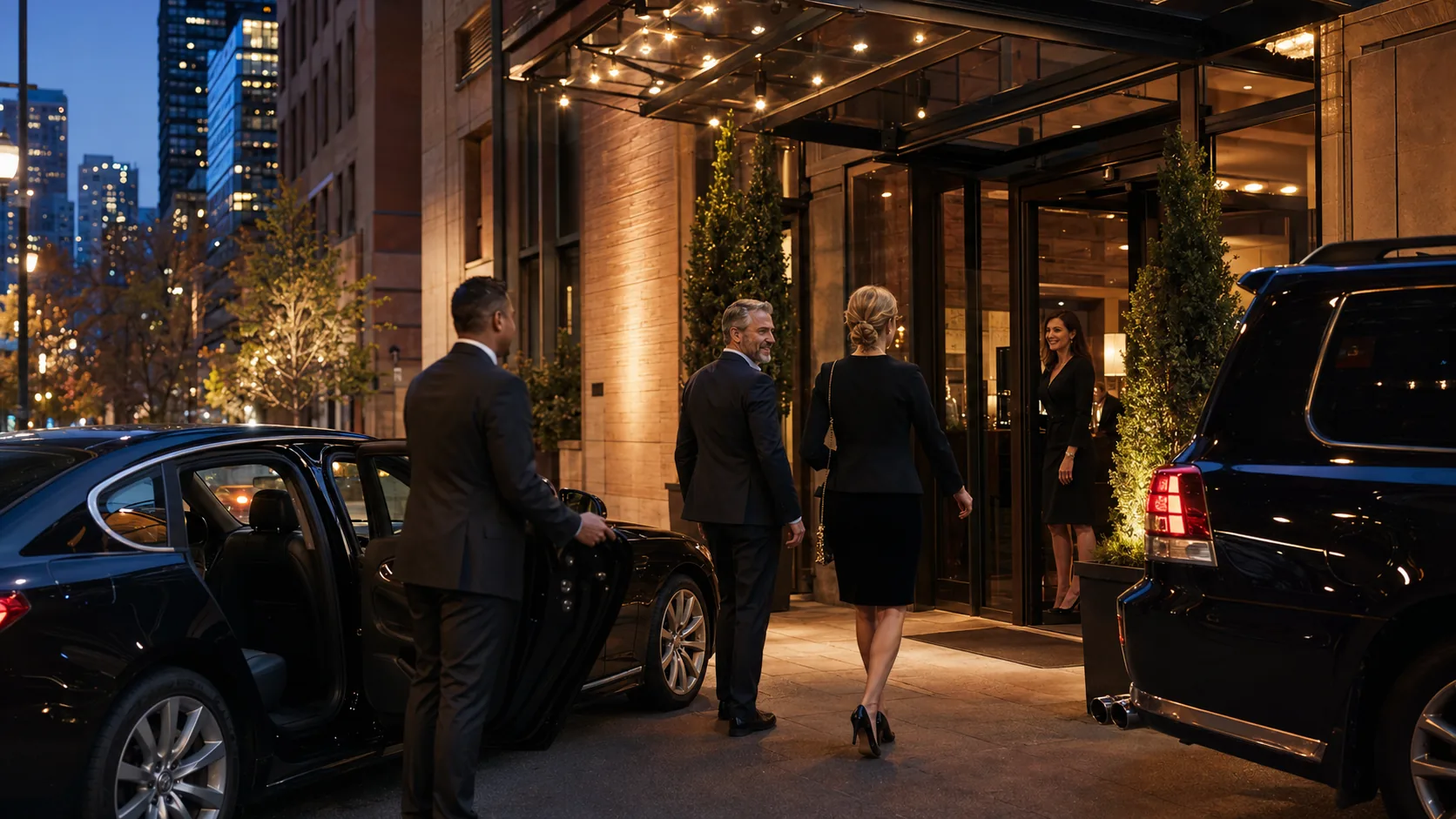
Decide whether the vehicle waits, returns at a fixed time, or provides several scheduled departures. Guests should know the exact pickup door. Downtown curb access may require the chauffeur to approach only when the party is ready.
Allow the schedule to change safely
Meetings run long. Weather changes. A client adds a stop. Build a procedure before the trip: the coordinator contacts dispatch, dispatch confirms the new plan, and the group receives one revised instruction.
Hourly service can offer flexibility for an evolving itinerary. Fixed transfers may control cost for movements that will not change. Ask for both approaches when requesting a Chicago corporate transportation quote.
Send a complete request
Include dates, local times, addresses, entrances, flight details, passenger names, luggage, vehicle preferences, and billing instructions. With those facts, the transportation team can find schedule gaps before they affect a meeting or client event.
Coordinate billing without involving guests
Set the corporate billing contact before the first pickup. Provide the cost center, purchase order, or event code that should appear on the invoice. Decide who can approve added waiting time, an unscheduled stop, or a vehicle extension. Clients and visiting executives should not be asked to settle internal account questions during the trip.
Perform a morning and evening transportation check
The coordinator should confirm the first departure, current flight information, passenger assignments, and any building-access changes each morning. Before the final meeting ends, confirm the dinner movement and return schedule again.
This does not require repeated calls to every traveler. One accurate update to dispatch and one short message to the affected passengers keep the plan current without creating noise during the business day.